
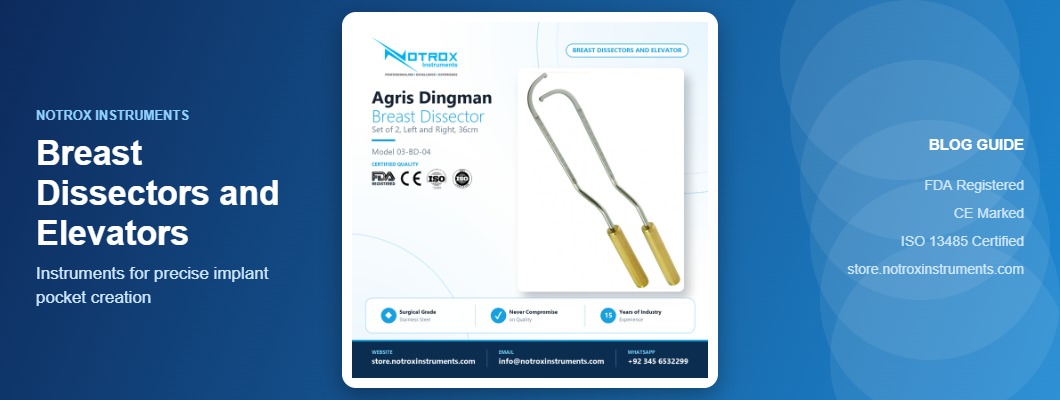
In breast augmentation, the shape of the implant pocket largely decides the final result. A pocket that is too tight, too wide or uneven leads to malposition, asymmetry and revision surgery. Breast dissectors are long, specially shaped instruments that let the surgeon create and refine the pocket through a small incision. This guide explains the main patterns and how they are used.
Why Specialised Dissectors?
Augmentation incisions in the inframammary fold, around the areola or in the armpit are short compared with the size of the pocket. Standard instruments cannot reach the far edges. Breast dissectors are long (often 30 to 43 cm) with blunt, shaped tips that separate tissue along natural planes, with less bleeding and less trauma.
Main Patterns
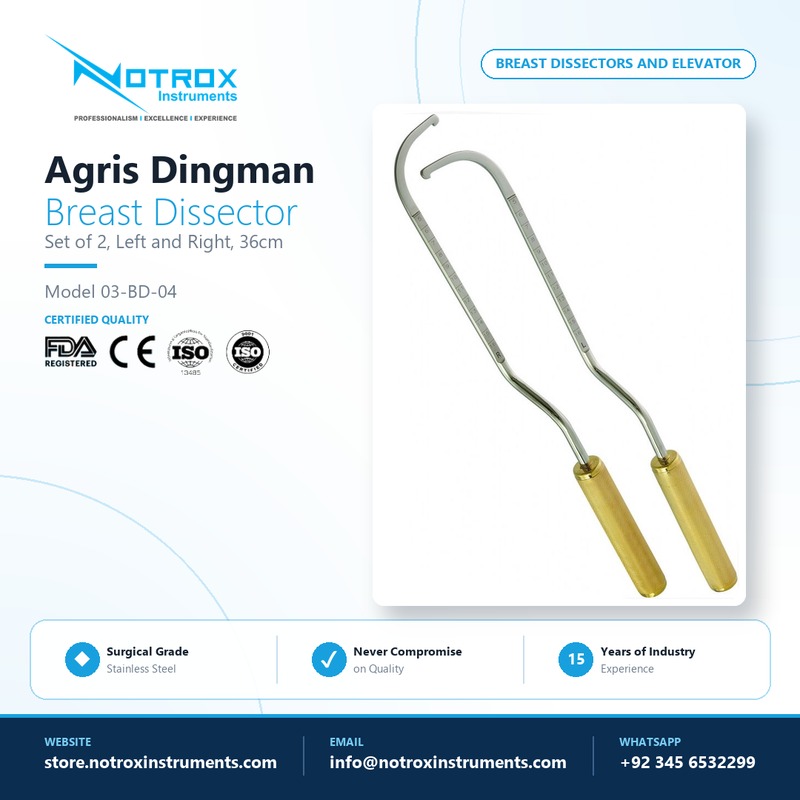
- Agris Dingman dissectors: a left and right pair ($137.50 a set), curved to follow the chest wall on each side. The standard choice for inframammary and periareolar approaches.
- MacCollum Dingman dissectors: long submammary dissectors for releasing the pocket under the breast, in several widths and lengths.
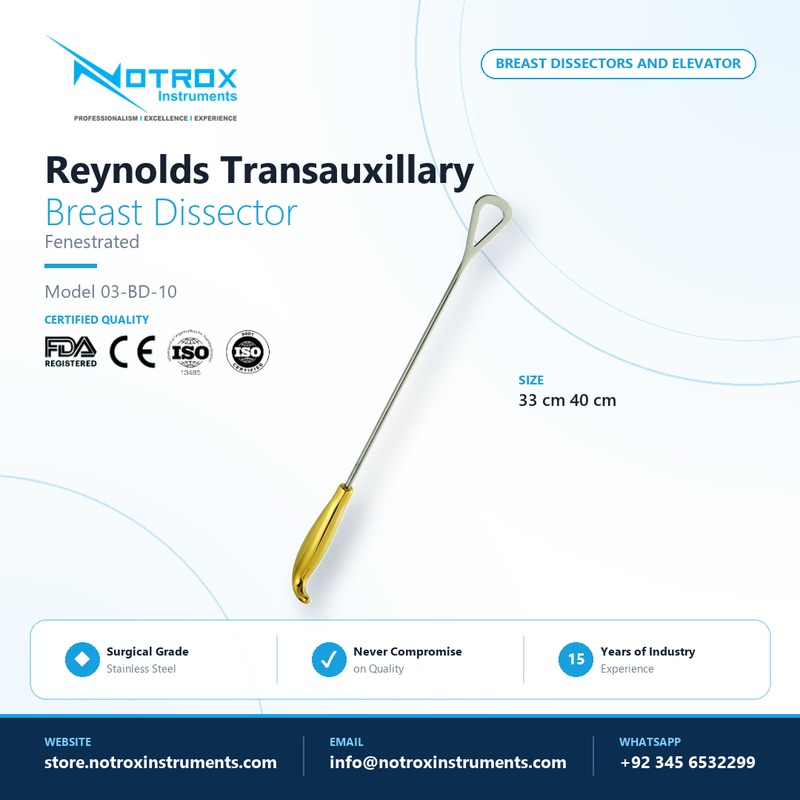
- Reynolds transaxillary dissector: fenestrated blade for the armpit approach, reaching down to the inframammary fold.
- Solz atraumatic and Solz hook dissectors: rounded tips for gentle blunt dissection.
- Angulated, spatulated and oval spatulated blades: different blade profiles for different parts of the pocket.
- Penn and Silverstein dissectors: straight dissectors for controlled release.
- Iconoclast: large and small versions for releasing the pectoralis attachments and the lower pole.
- McInnis polycurette: a curette-style instrument for refining the pocket.
Trocar Breast Tubes
Trocar breast tubes (small and large, $100 each) create a tunnel from a remote incision, mainly in transaxillary or periumbilical approaches. The trocar passes through the tissue, then the tube guides further dissection or instruments.
The Breast Elevator
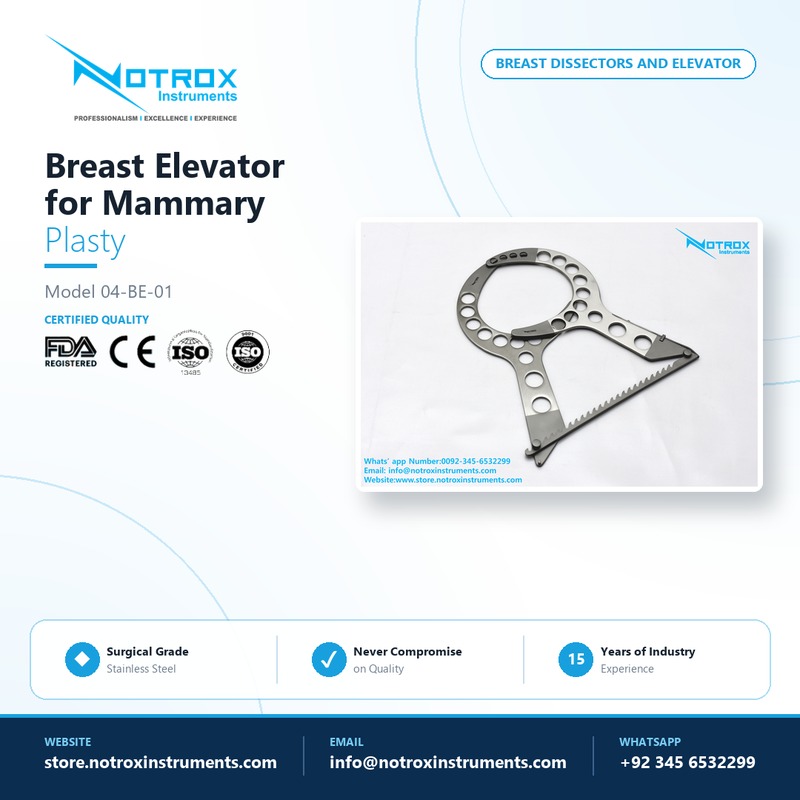
A breast elevator for mammaplasty ($250) lifts the breast tissue away from the chest wall so the surgeon can see into the pocket. It is especially useful when checking for bleeding and symmetry before inserting the implant, and works well with a lighted fiber optic retractor.
Building an Augmentation Tray
- One pair of Agris Dingman dissectors for the main pocket.
- A MacCollum Dingman or Iconoclast for the lower pole and fold.
- A Reynolds dissector and trocar tubes if you use the transaxillary approach.
- A lighted Tebbetts or Biggs retractor and a breast elevator for visibility.
For a complete solution, see our ready-made Breast Augmentation Instrument Set ($1,075).
Browse the full range in our Breast Dissectors and Elevator category.
Why Choose Notrox Instruments
- Certified quality: FDA registered, CE marked, and ISO 13485 and ISO 9001 certified manufacturing.
- 15 years of experience: made by skilled craftsmen in Sialkot, Pakistan, with an office in the USA.
- Hand checked: every instrument is inspected for finish, alignment and function before it ships.
- Free delivery on orders over $2000.
Have a question or need a custom quote? Email [email protected] or message us on WhatsApp at +92 345 6532299. Browse the full range at store.notroxinstruments.com.