
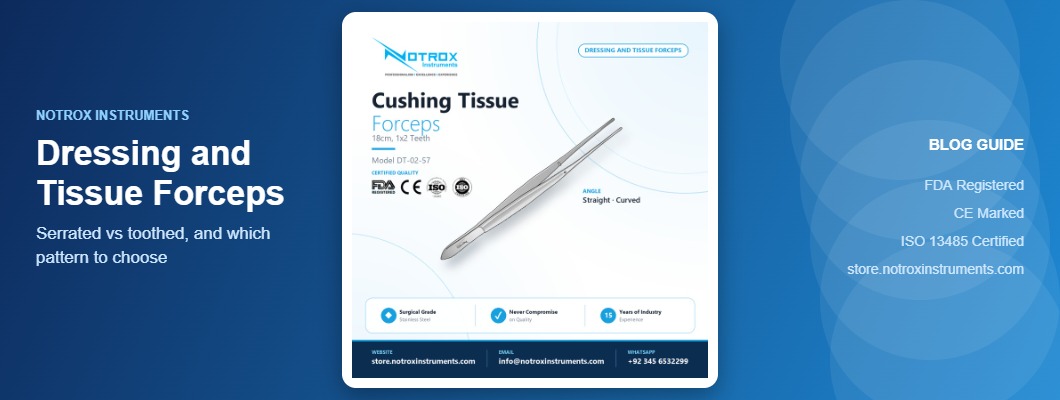
Dressing and tissue forceps, also called thumb forceps, are held like a pencil and used in almost every step of surgery: holding tissue for dissection, stabilising wound edges for suturing, and handling dressings and swabs. They look simple, but the tip design makes a big difference to how gently the tissue is treated. This guide explains the types and patterns.
Dressing Forceps vs Tissue Forceps
- Dressing forceps have serrated, toothless tips. They grip dressings, swabs, sutures and delicate structures such as vessels and bowel without piercing them.
- Tissue forceps have interlocking teeth at the tip (for example 1x2: one tooth on one side, two on the other). The teeth hold skin and fascia securely with less pressure, which actually causes less crushing on tough tissue.
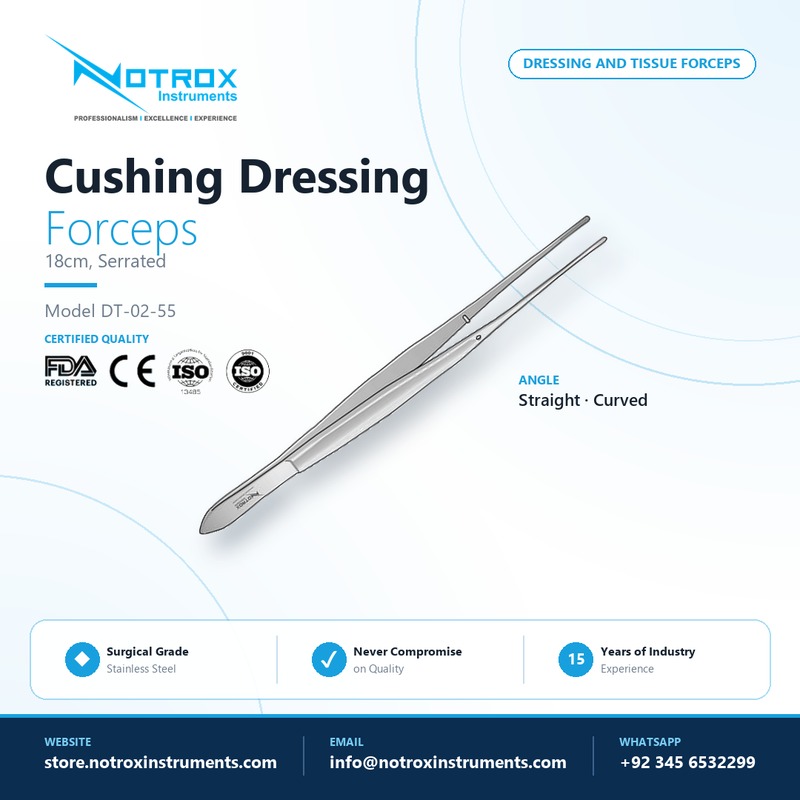
How Many Teeth?
- 1x2 teeth: the standard for skin and subcutaneous tissue.
- 2x3 teeth ($8): a firmer hold for thicker tissue.
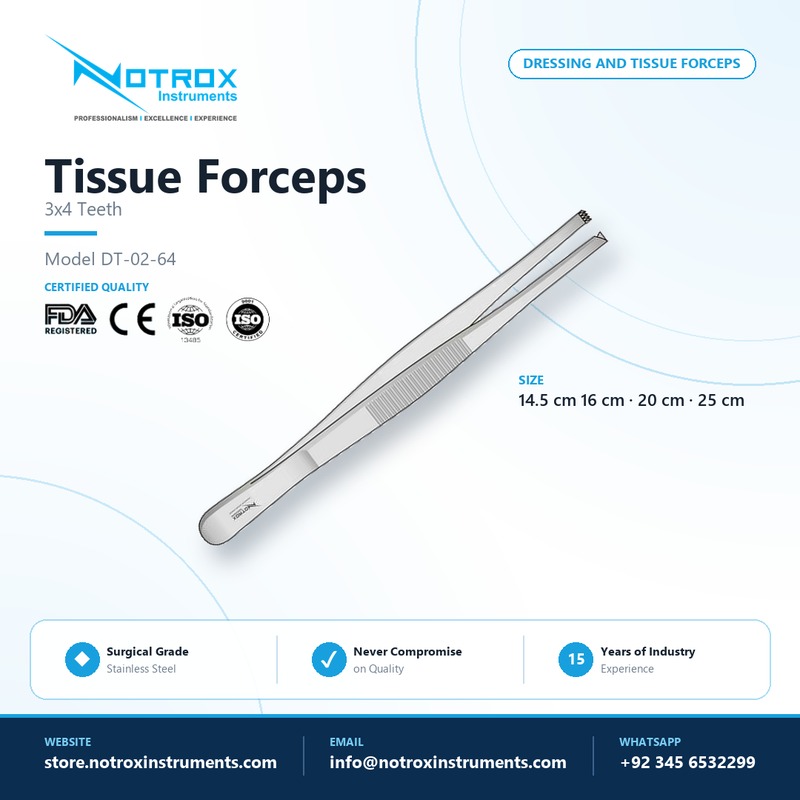
- 3x4 and 4x5 teeth ($9): for fascia and tough tissue in general and orthopedic surgery.
Popular Patterns
- Standard dressing forceps ($6) and dressing forceps 20 cm ($18): everyday forceps for wards and dressing trays.
- Delicate narrow dressing and tissue forceps ($7 to $7.50): slim tips for fine work.
- Stille dressing forceps ($7): a classic Scandinavian pattern.
- Cushing forceps, 18 cm ($9 serrated, $9.50 with teeth): longer, slim forceps for deeper fields.
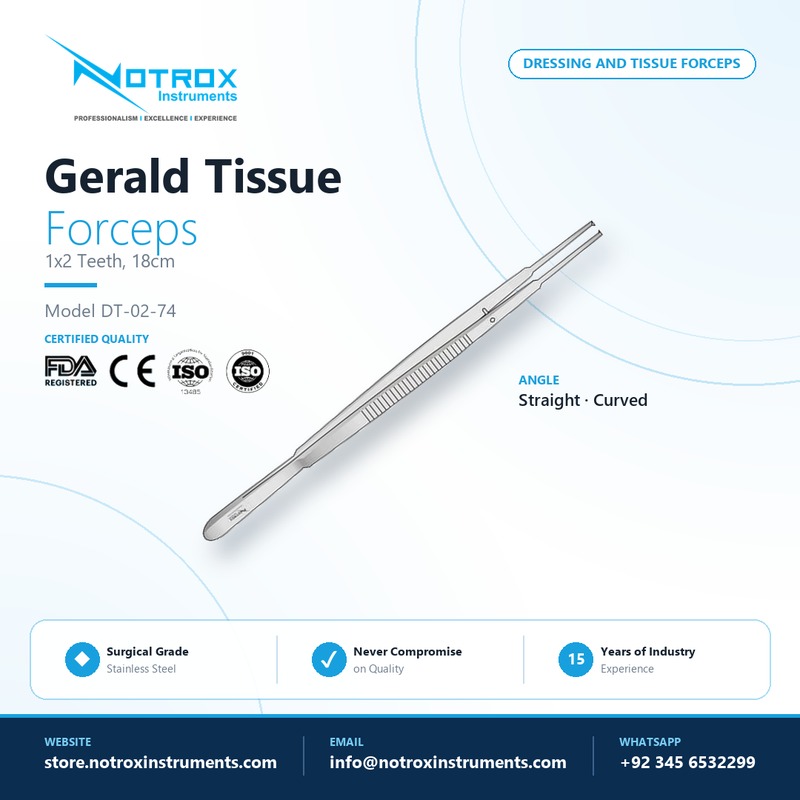
- Gerald forceps, 18 cm ($9 and $9.50): very fine tips on a long shaft, used in neurosurgery and fine plastic work.
- Potts-Smith forceps, 18 cm ($9 and $9.50): popular in cardiovascular and general surgery.
- Waugh dressing and tissue forceps ($12): a sturdy all-round pattern.
- Gruenwald Jansen nasal bayonet forceps (16 cm, $15): bayonet shape for nasal packing and dressing.
Choosing Length
Use 10 to 12 cm forceps for superficial work on the face and hands, 14 to 15 cm for general skin and soft tissue, and 18 to 20 cm for deeper cavities. Every tray should carry both a toothed and a serrated pair in each length used.
Care Tips
- Check that the tips meet exactly and the teeth interlock cleanly.
- Do not use fine forceps to grip needles; that damages the tips.
- Clean the serrations with a soft brush straight after use.
See all patterns in our Dressing and Tissue Forceps category.
Why Choose Notrox Instruments
- Certified quality: FDA registered, CE marked, and ISO 13485 and ISO 9001 certified manufacturing.
- 15 years of experience: made by skilled craftsmen in Sialkot, Pakistan, with an office in the USA.
- Hand checked: every instrument is inspected for finish, alignment and function before it ships.
- Free delivery on orders over $2000.
Have a question or need a custom quote? Email [email protected] or message us on WhatsApp at +92 345 6532299. Browse the full range at store.notroxinstruments.com.