
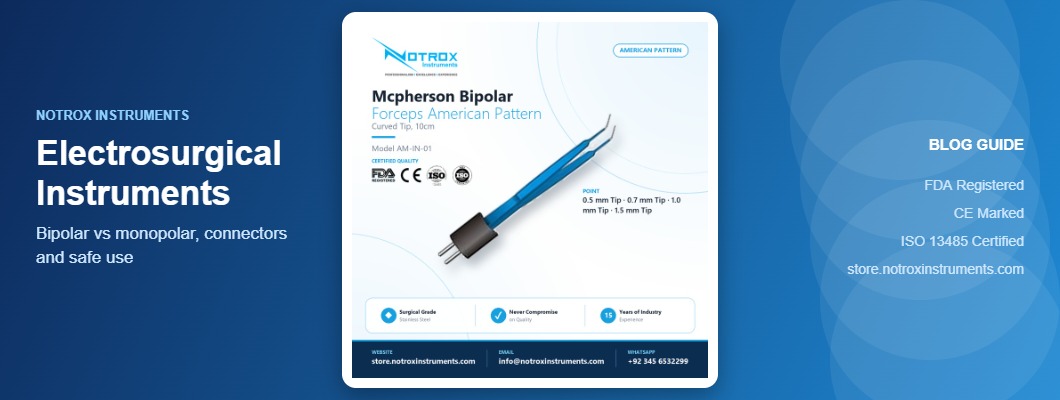
Electrosurgery has changed the way surgeons cut tissue and control bleeding. A high-frequency current from an electrosurgical unit can divide tissue and seal small vessels in one step. The result is a drier field, less blood loss and often a shorter operation. Electrosurgical instruments are now standard in plastic surgery, neurosurgery, ENT, gynecology and general surgery.
Getting the most from electrosurgery depends on choosing instruments that suit your generator, your specialty and the tissue you work on. This guide covers the key decisions.
Bipolar vs monopolar: what's the difference?
Bipolar electrosurgery passes current only between the two tips of the forceps. Only the tissue held between the tips is affected, so there is minimal spread to surrounding structures and no patient return pad is needed. This makes bipolar the first choice for delicate work near nerves and vessels, such as neurosurgery, microsurgery, plastic surgery and ENT.
Monopolar electrosurgery sends current from an active instrument, such as a forceps, scissors or pencil, through the patient to a return electrode. It is efficient for cutting and for coagulating larger areas, which is why it is common in general and gynecological surgery.
Many theatres use both, so it makes sense to stock both bipolar and monopolar instruments.
Check your connector first: American vs European pattern
This is the most common ordering mistake in electrosurgery. American and European bipolar connectors are not interchangeable. Before ordering forceps or cables, check which socket your electrosurgical unit and existing cables use.
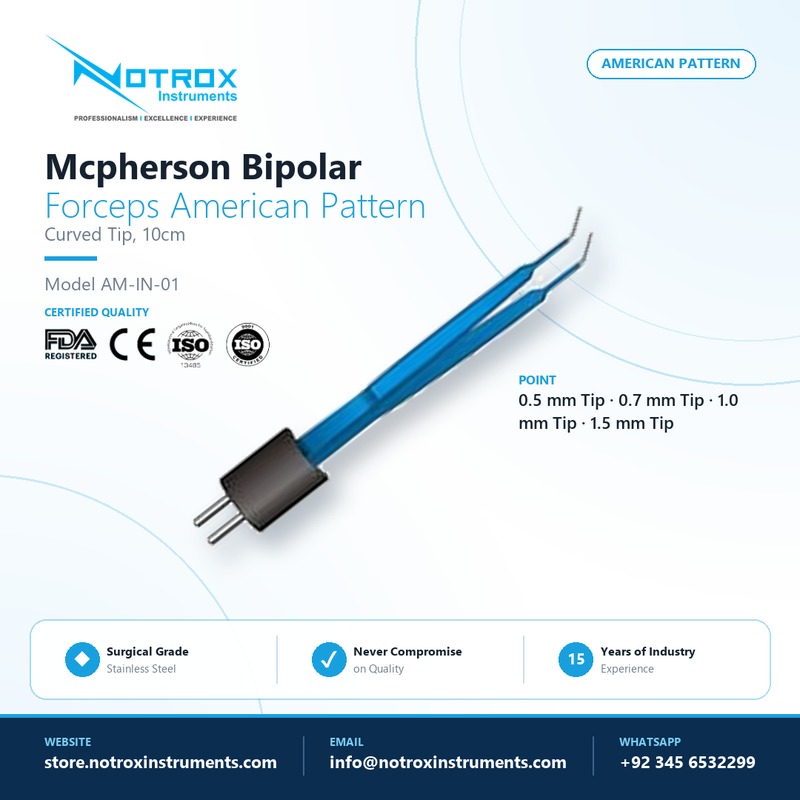
- American pattern: includes McPherson, Jewelers, Adson, Cushing, Jansen, Malis, Scoville and Hardy bipolar forceps
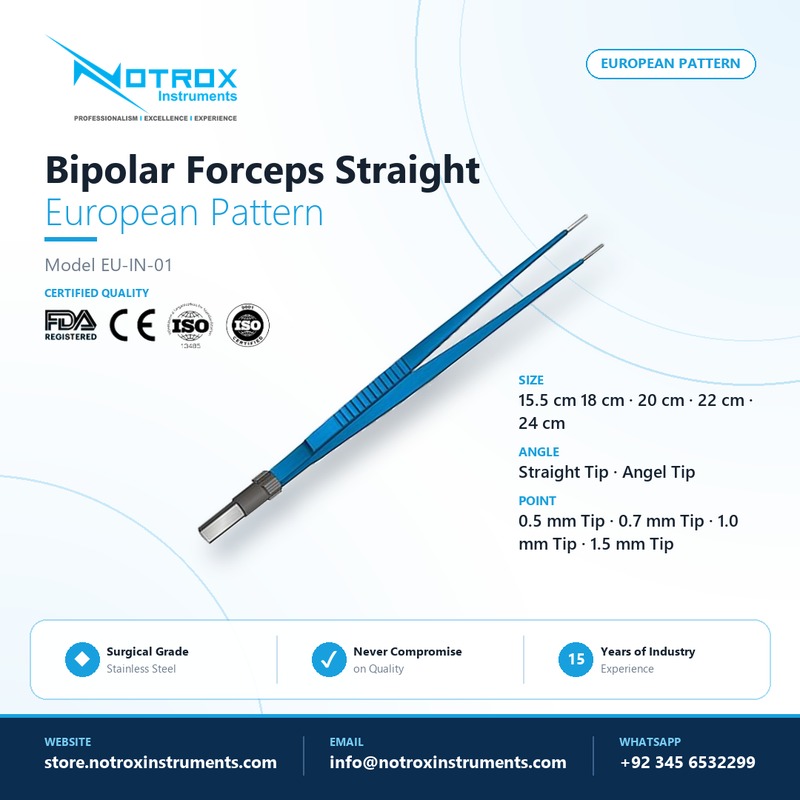
- European pattern: includes standard and bayonet bipolar forceps, irrigating forceps, block connector and non-stick versions
If the pattern matches, Notrox bipolar forceps will work with your existing cables. We also stock silicone-coated reusable and single-use bipolar and monopolar cables for both patterns.
Choosing tip size and shape
- Very fine tips for microsurgery and neurosurgery, where precise, pinpoint coagulation matters
- Wider tips of 1 to 2 mm for general coagulation of larger vessels and tissue areas
- Bayonet forceps keep your hand out of the line of sight, which is ideal in deep or narrow fields and under the microscope
- Straight forceps for open surgery with good direct access
- Irrigating and non-stick tips reduce char build-up and tissue sticking during long cases, so you spend less time cleaning tips in the middle of a procedure
Beyond forceps: the rest of the range
A complete electrosurgical setup includes more than forceps. Our electrosurgical range also covers:

- Monopolar instruments: forceps and scissors with a choice of connector types
- Gynecological instruments: insulated specula with smoke evacuation tubes, retractors, forceps and hooks for procedures such as LEEP
- Electrosurgical pencils: finger-switch, foot-control and rocker-switch designs
Safety: inspect insulation every time
Insulation is what keeps current where you want it. A small crack, nick or area of peeling can let current reach tissue you did not intend to treat and cause burns away from the operating site. Build these checks into your routine:
- Inspect insulation before every use under good light, and retire any instrument with damage.
- Clean tips gently. Remove char with a soft method that does not scratch the tip surface, especially on non-stick tips.
- Follow the sterilization method shown on each item page.
- Store cables loosely coiled. Tight bends and kinks damage the conductors inside.
Why choose Notrox electrosurgical instruments?
Every Notrox electrosurgical instrument is quality checked before dispatch. Our manufacturing is FDA registered, CE marked, and ISO 13485 and ISO 9001 certified, backed by 15 years of experience in surgical instrument manufacturing.
Not sure which pattern or tip you need? Browse our electrosurgical instruments, or email [email protected] or message us on WhatsApp at +92 345 6532299 with your generator model and we will help you match it.