
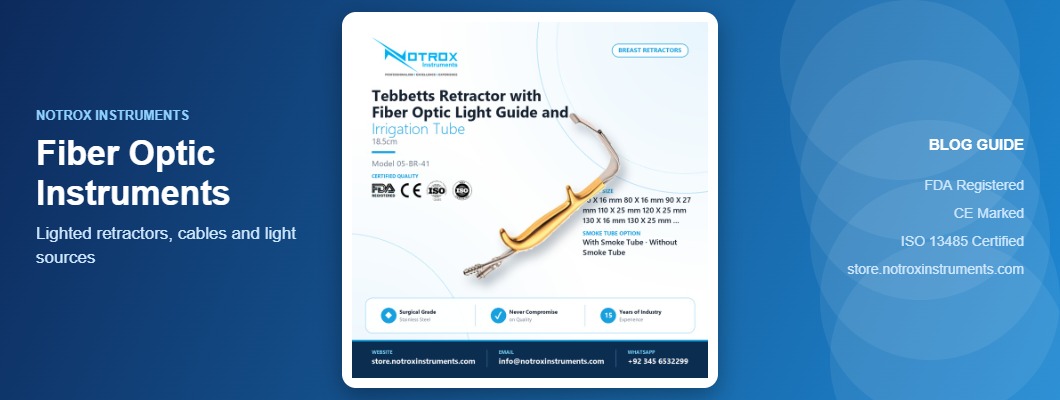
Plastic surgery is increasingly performed through small incisions, and the deeper the pocket, the harder it is to see. Overhead theatre lights and headlights struggle to reach the far end of a breast pocket or under a facelift flap. Fiber optic retractors solve this by bringing light directly to the tip of the blade, exactly where the surgeon is working. This guide explains how lighted retractor systems work and how to choose them.
How the System Works
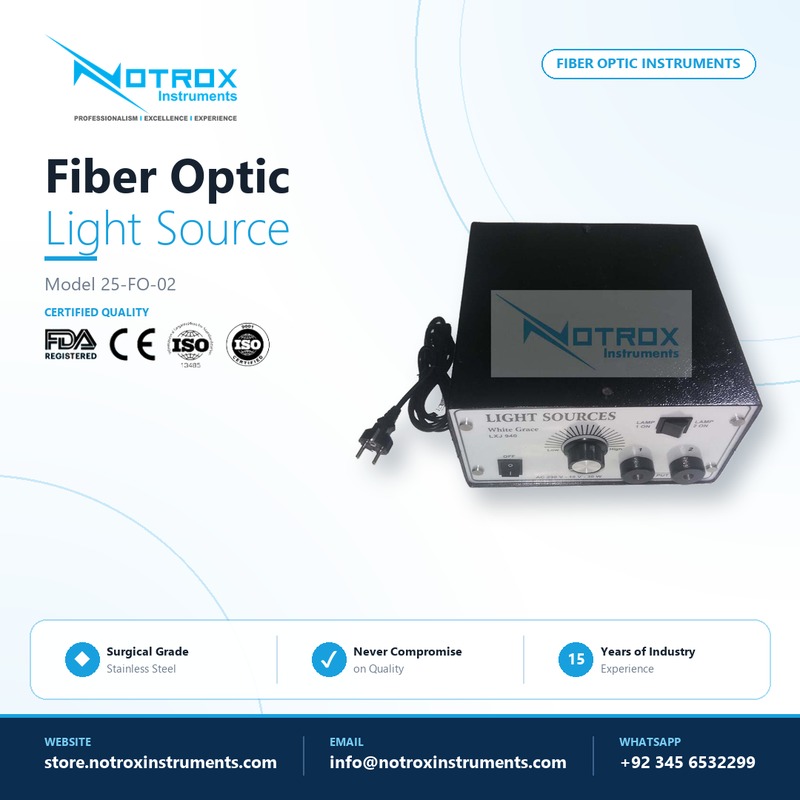
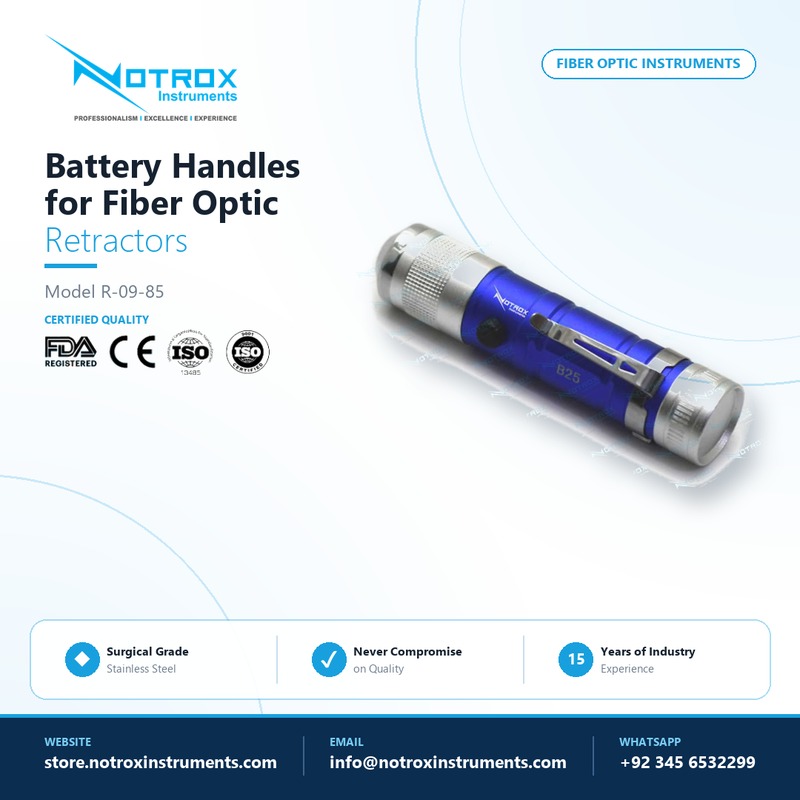
A fiber optic system has three parts. A light source produces bright, cool light. A fiber optic cable carries that light to the instrument. The retractor has a light guide built into or clipped onto its blade, which delivers the light to the tip. Because the light travels with the blade, the field stays lit wherever the retractor is placed. Battery handles are also available for cordless use.
Retractors for Breast Surgery
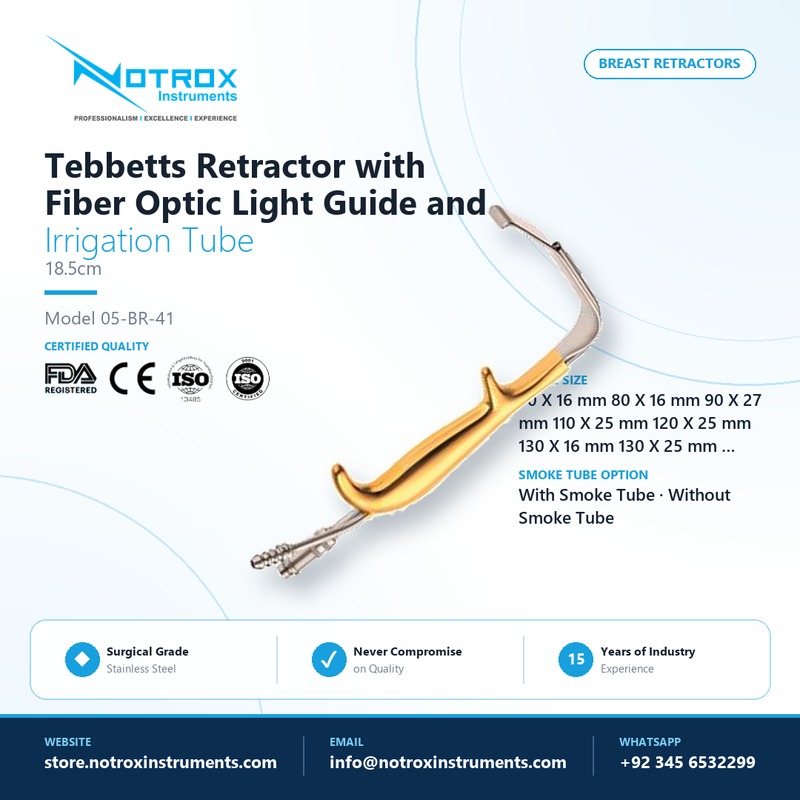
- Tebbetts retractors: the most popular lighted breast retractors, available with irrigation tube, double handle, toothed or smooth tips, and insulated blades for use with electrocautery.
- Biggs mammaplasty retractors: wide and narrow blade versions for creating and checking the implant pocket.
- Ferreira retractors: long blades for breast augmentation through inframammary and periareolar incisions.
- Double handed and ring breast retractors: allow an assistant to lift heavy tissue with less fatigue, some with suction or irrigation.
- Sculpo breast retractors: 180 x 25 mm blades for deep pocket access.
Retractors for Face, Nose and Body
- Aufricht, Walter and Converse nasal retractors and the Killian nasal speculum with illumination for rhinoplasty.
- Ferreira face lift retractor and Freeman flap retractor for lighting under facial flaps.
- Wieder retractor for breast, facial and intraoral work.
- Deaver lighted retractor and Saldanha-Solz abdominal retractors for abdominoplasty and body contouring.
Insulated Blades and Electrocautery
Pocket dissection is usually done with electrocautery. Insulated blades stop current from passing through the retractor to surrounding tissue or to the assistant. If your technique relies on cautery in the pocket, choose insulated Tebbetts models.
Buying Tips
- Check that cable connectors match your light source, or buy the source and cable together.
- Keep spare cables: broken fibers inside a cable reduce brightness long before the cable looks damaged.
- Wipe light guides clean after each use, as dried blood dims the output.
- Handle cables gently and never kink them tightly.
See all lighted retractors, cables ($250) and light sources ($500) in our Fiber Optic Instruments category.
Why Choose Notrox Instruments
- Certified quality: FDA registered, CE marked, and ISO 13485 and ISO 9001 certified manufacturing.
- 15 years of experience: made by skilled craftsmen in Sialkot, Pakistan, with an office in the USA.
- Hand checked: every instrument is inspected for finish, alignment and function before it ships.
- Free delivery on orders over $2000.
Have a question or need a custom quote? Email [email protected] or message us on WhatsApp at +92 345 6532299. Browse the full range at store.notroxinstruments.com.