
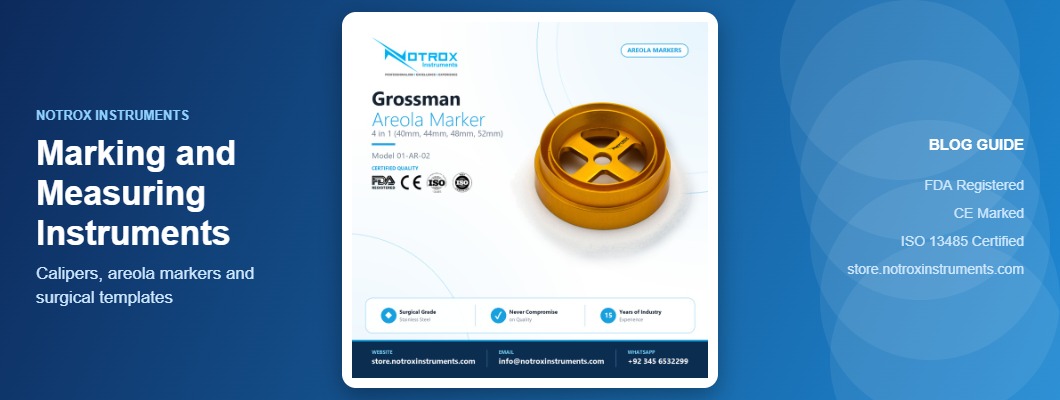
In aesthetic surgery, the result is often decided before the first incision. Careful pre-operative marking and measurement give symmetry, predictable scars and outcomes that match the plan agreed with the patient. A few millimetres of error in an areola diameter or a flap outline can be visible for life. This guide covers the main marking and measuring instruments and how surgeons use them.
Calipers
Calipers transfer and compare distances with far more accuracy than a ruler on a curved surface.
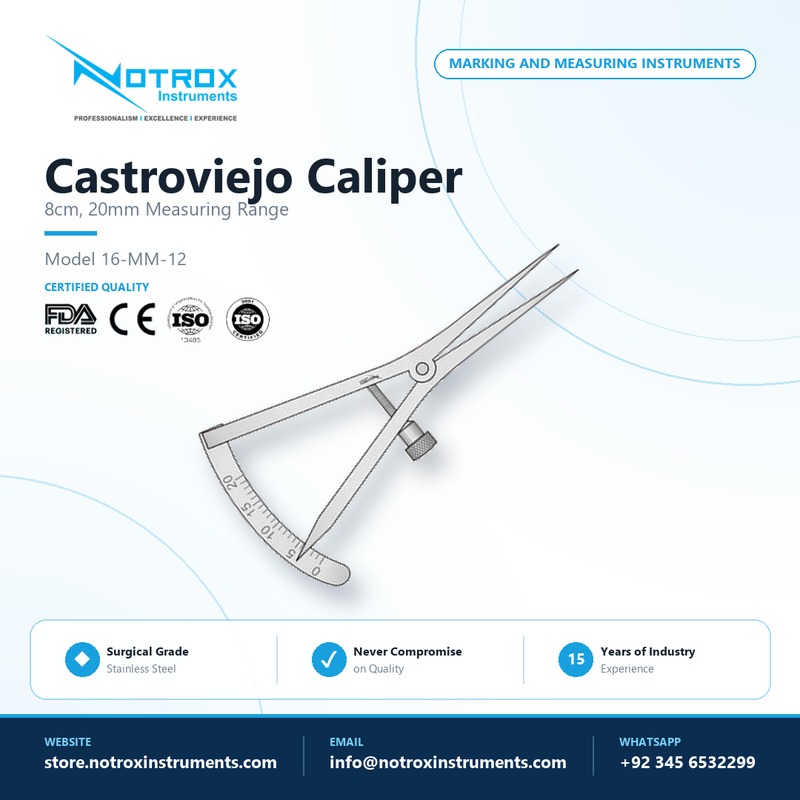
- Castroviejo calipers: small, precise calipers with 15 to 40 mm ranges, ideal for eyelid, nasal and facial measurements. Straight, curved and Epker angled versions are available.
- Jameson and Thorpe calipers: larger ranges for breast and body measurements.
- Knochen Messzirkel bone bow spacer: sharp-tipped calipers for bone and craniofacial work.
Areola Markers
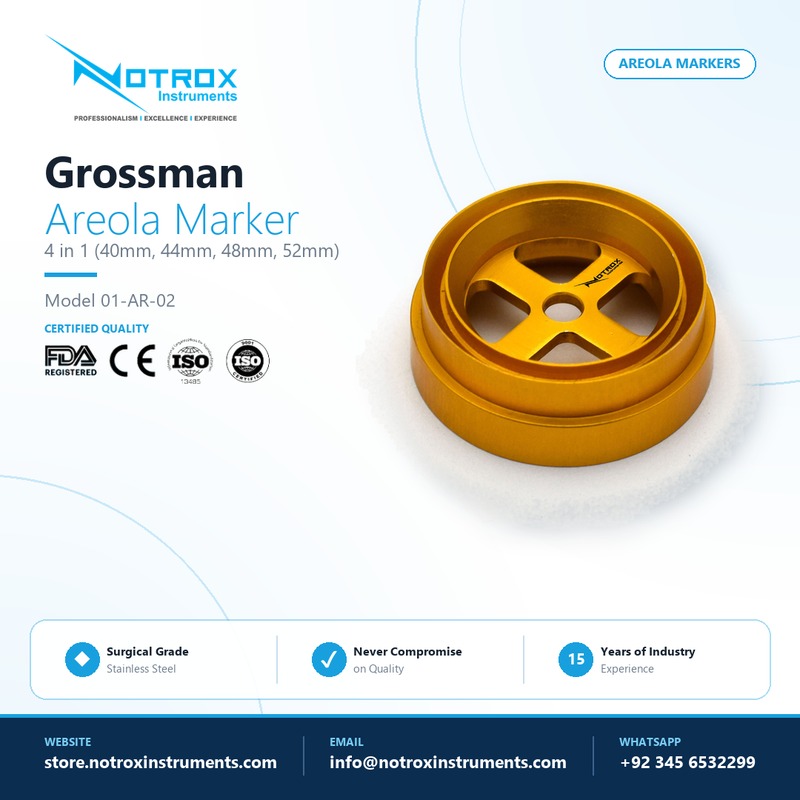
Areola markers stamp or trace a perfect circle so that both sides match after reduction, mastopexy or reconstruction.
- Grossman 4 in 1 areola marker: four diameters (40, 44, 48 and 52 mm) in one instrument, the most flexible choice at $100.
- Freeman areola markers: classic cookie-cutter style markers in two sizes.
- Solz blunt areola marker: gives an even outline without scoring the skin.
- Ackerman breast marker and McKissock keyhole pattern: templates for the keyhole pattern used in breast reduction.
Flap and Abdominal Markers
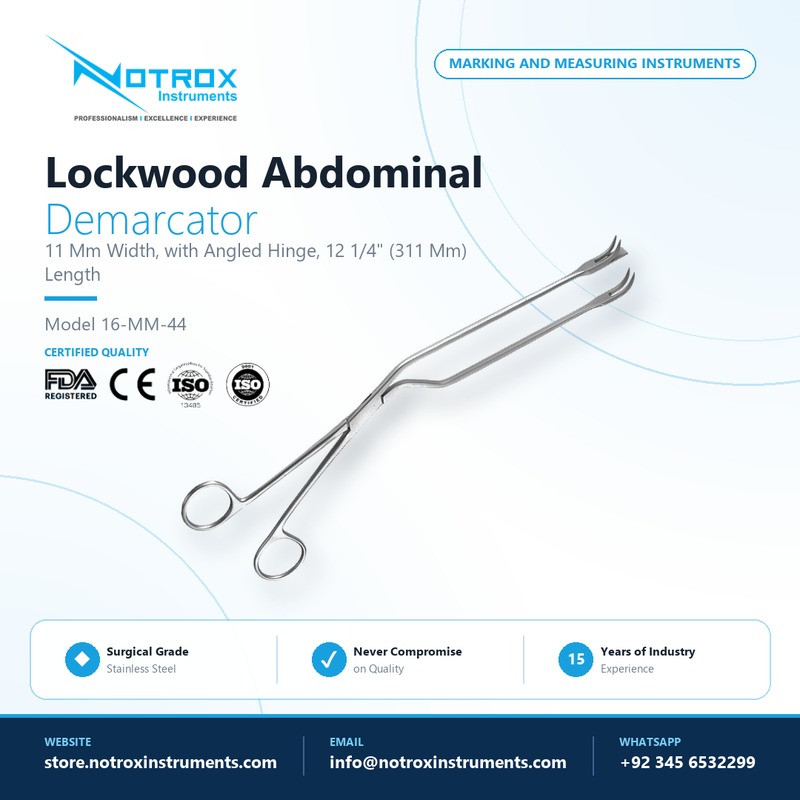
Body contouring needs long, symmetrical lines. The Lockwood abdominal demarcator and D Assumpcao abdominal flap marker mark the planned resection line in abdominoplasty by pinching the flap and marking both surfaces at once. The Pitanguy facelift marker and Marten flap marker do the same job for facial flaps, showing exactly how much skin can be removed.
Nasal and Facial Measurement
- Nose tip marker: marks tip projection points during rhinoplasty.
- Joseph measuring rod: graduated in millimetres for nasal length and projection.
- Sheen grid: a stainless steel 40 x 70 mm grid used to shape and check cartilage grafts.
Other Useful Tools
- Flexible stainless steel rulers (15 and 20 cm) bend over curved surfaces.
- Moltgen flexometer and finger goniometer measure angles and joint range in hand surgery.
- Round bowls hold marking ink or methylene blue.
Tips for Accurate Marking
- Mark the patient standing or sitting upright, then check again lying down.
- Use fixed landmarks such as the sternal notch and midline, and measure both sides from them.
- Use sterilisable stainless steel markers that can be used again inside the sterile field.
Explore the full range in our Marking and Measuring Instruments category.
Why Choose Notrox Instruments
- Certified quality: FDA registered, CE marked, and ISO 13485 and ISO 9001 certified manufacturing.
- 15 years of experience: made by skilled craftsmen in Sialkot, Pakistan, with an office in the USA.
- Hand checked: every instrument is inspected for finish, alignment and function before it ships.
- Free delivery on orders over $2000.
Have a question or need a custom quote? Email [email protected] or message us on WhatsApp at +92 345 6532299. Browse the full range at store.notroxinstruments.com.