

The scalpel is the first instrument used in almost every operation, yet handles and blades are often bought without much thought. The handle decides reach, balance and control, while the blade shape decides the kind of cut. Getting the combination right makes incisions cleaner and safer. This guide explains how handles and blades fit together and which combinations suit which procedures.
Handle Sizes and Blade Fits
Detachable blades fit onto a bayonet fitting on the handle. Two fitting sizes cover almost all surgery:
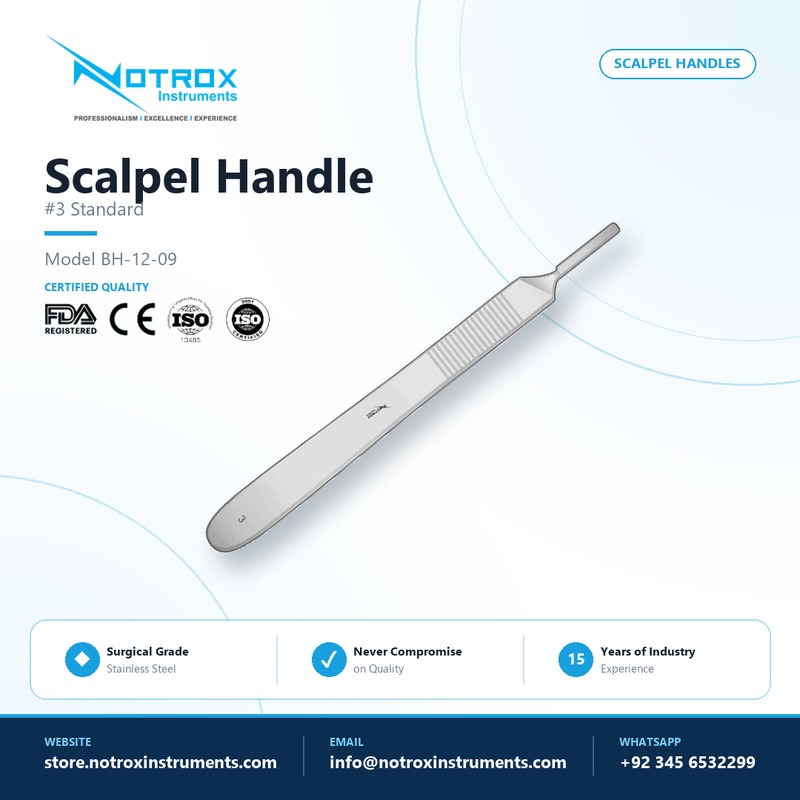
- #3 fitting handles (including #3 standard, #3L long, #3LA long angled and #7) take the smaller blades: Fig.10, 11, 12, 13 and 15.
- #4 fitting handles (including #4 standard and #4L long) take the larger blades: Fig.20, 21, 22, 23 and 25.
A #3 handle cannot take a #4 blade, so stock both handle types if your theatre uses both blade ranges.
Choosing the Blade
- Fig.10: the classic curved general-purpose blade for skin incisions.
- Fig.11: pointed, triangular blade for stab incisions, drain sites and precise entry.
- Fig.12: hooked blade for cutting sutures and specialised ENT and dental work.
- Fig.15: small curved blade, the favourite of plastic surgeons for short, precise facial and hand incisions.
- Fig.20 to Fig.25: larger curved blades on #4 handles for long incisions in general, orthopaedic and abdominal surgery.
All our blades come in packs of 100 for $15.
Which Handle for Which Job
- #3 standard: the everyday handle for most soft-tissue surgery. A version with a printed scale lets you measure incisions as you go.
- #7 and #7K short: slim, pencil-like handles for fine plastic, eye and hand surgery.
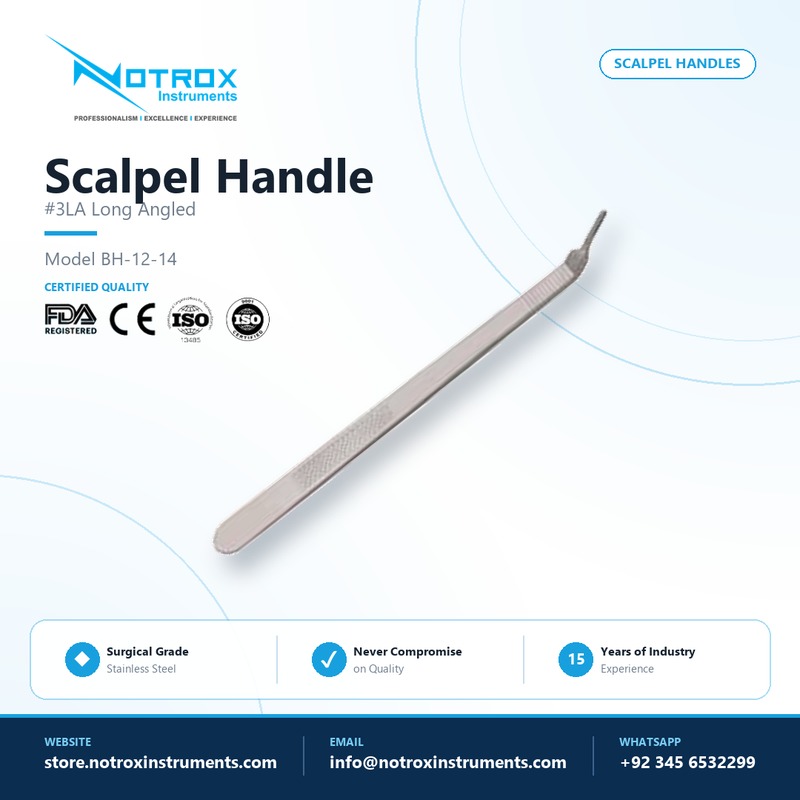
- #3L long, long slim and #3LA long angled: reach into deep cavities, the mouth and the nose without the hand blocking the view.
- Bayonet handle: offset design for nasal and ENT work through narrow openings.
- Round handles: roll between the fingers for curved incisions, popular in facial surgery.
- Barron octagonal and Collin #8 hollow handles: lightweight alternatives with a secure grip.
Micro Blade Handles
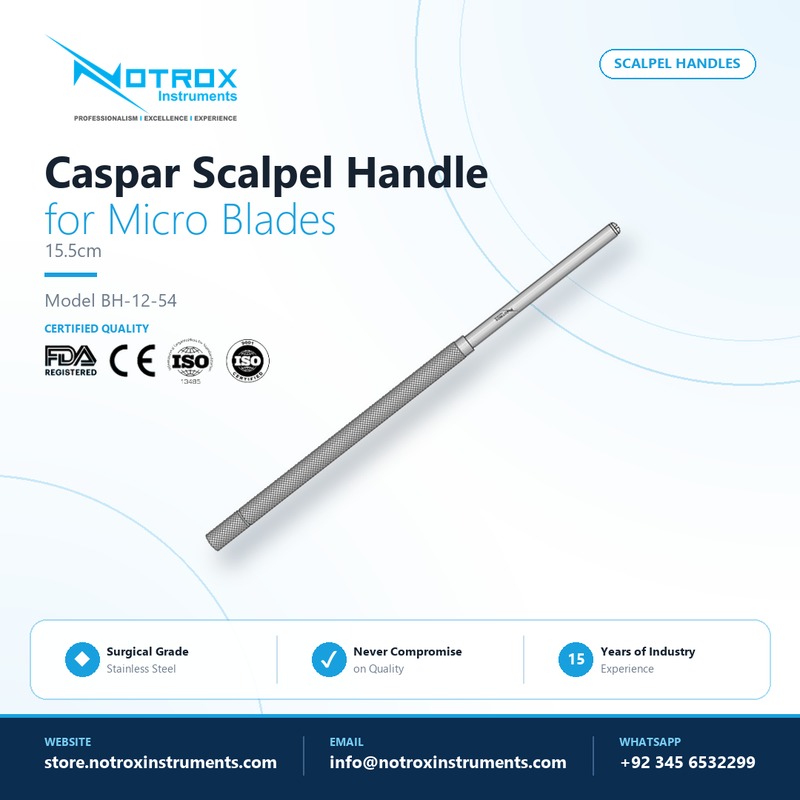
For microsurgery, eyelid work and very fine plastic surgery, micro blades are held in knurled chuck or Caspar handles. The round knurled chuck handles (10 and 15 cm) allow fine rotation, while Caspar handles (15.5 to 20 cm) give more reach. A razor blade breaker and holder lets you snap a standard razor blade into a custom micro blade.
Safe Handling
- Always load and remove blades with a needle holder or blade remover, never with the fingers.
- Pass scalpels in a neutral zone or kidney dish rather than hand to hand.
- Dispose of used blades straight into a sharps container.
- Check handle fittings regularly: a worn bayonet lets the blade wobble.
Shop handles, blades and micro handles in our Scalpel Handles category.
Why Choose Notrox Instruments
- Certified quality: FDA registered, CE marked, and ISO 13485 and ISO 9001 certified manufacturing.
- 15 years of experience: made by skilled craftsmen in Sialkot, Pakistan, with an office in the USA.
- Hand checked: every instrument is inspected for finish, alignment and function before it ships.
- Free delivery on orders over $2000.
Have a question or need a custom quote? Email [email protected] or message us on WhatsApp at +92 345 6532299. Browse the full range at store.notroxinstruments.com.