
24 Nov

0
21
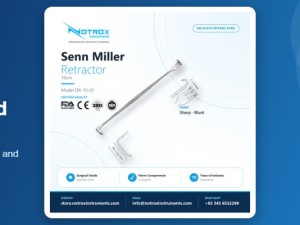
Large self-retaining retractors hold open the abdomen, but plastic, facial and hand surgery need something far more gentle. Delicate retractors and skin hooks hold back thin skin and soft tissue with minimal pressure, so wound edges are not crushed and scars heal well. This guide explains the main patterns and where each is used.Hand-Held Delicate ..
24 Nov
0
22
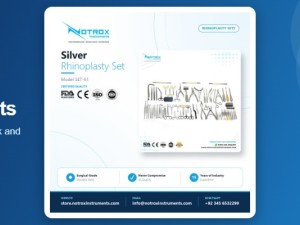
Rhinoplasty is one of the most instrument-intensive procedures in plastic surgery. A typical operation uses retractors, scissors, elevators, osteotomes, rasps, forceps and cartilage tools, often several of each. Buying instruments one at a time is slow and easy to get wrong. A complete rhinoplasty set gives you a tested, matched selection in one pu..
24 Nov
0
24
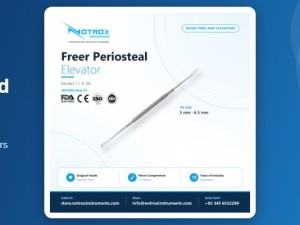
Dissectors and elevators separate tissue layers with minimal damage. Rather than cutting, they lift periosteum off bone, separate mucosa from cartilage, and open tissue planes through small incisions. In modern plastic surgery, where so much is done endoscopically or through short access incisions, the shape of the dissector tip often decides wheth..
24 Nov
0
25
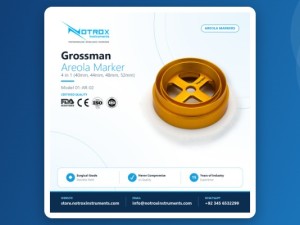
In aesthetic surgery, the result is often decided before the first incision. Careful pre-operative marking and measurement give symmetry, predictable scars and outcomes that match the plan agreed with the patient. A few millimetres of error in an areola diameter or a flap outline can be visible for life. This guide covers the main marking and measu..
24 Nov
0
25
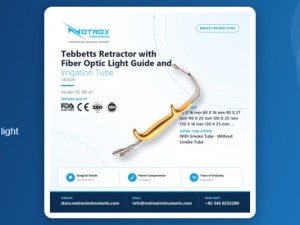
Plastic surgery is increasingly performed through small incisions, and the deeper the pocket, the harder it is to see. Overhead theatre lights and headlights struggle to reach the far end of a breast pocket or under a facelift flap. Fiber optic retractors solve this by bringing light directly to the tip of the blade, exactly where the surgeon is wo..
24 Nov
0
19
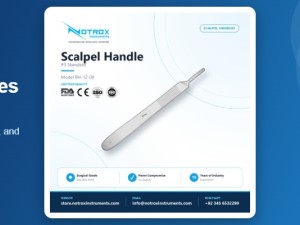
The scalpel is the first instrument used in almost every operation, yet handles and blades are often bought without much thought. The handle decides reach, balance and control, while the blade shape decides the kind of cut. Getting the combination right makes incisions cleaner and safer. This guide explains how handles and blades fit together and w..
24 Nov
0
21
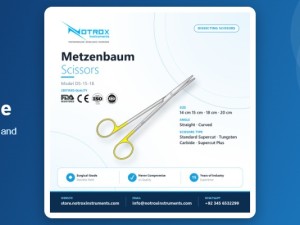
Scissors are among the most used instruments on any surgical tray, and dissecting scissors do far more than cut. Surgeons use them to spread tissue planes, undermine skin flaps, free structures from scar tissue and trim delicate layers. Choosing the right pattern, length, curve and edge makes dissection faster and safer. This guide compares the mai..
24 Nov
0
18
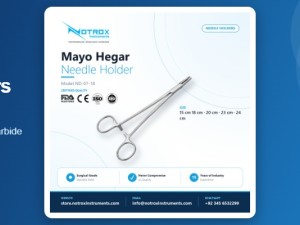
Every incision a surgeon makes has to be closed, and the quality of that closure depends heavily on one instrument: the needle holder. A good needle holder grips the needle firmly without rotating, does not damage fine suture material, and feels balanced in the hand during hundreds of throws. A poor one slips, twists the needle and tires the hand. ..
23 Nov
0
120
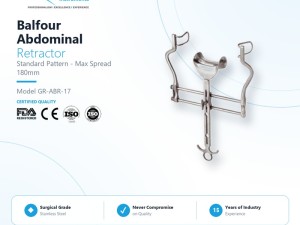
Good exposure is the starting point of every abdominal operation. A self-retaining abdominal retractor holds the wound open steadily, freeing the surgical team's hands and giving a clear view of the field for the whole procedure.
This guide compares the main abdominal retractor patterns, explains how to choose the right size, and covers care and ma..
23 Nov
0
44
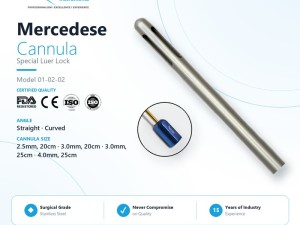
In liposuction and fat grafting, the cannula tip decides how the fat is infiltrated, harvested and placed. A Luer Lock connection lets one handle or syringe take many interchangeable cannulas, which is why Luer Lock cannulas are the backbone of many body contouring and fat transfer kits.
This guide explains the main cannula tip designs, the differe..
23 Nov
0
38
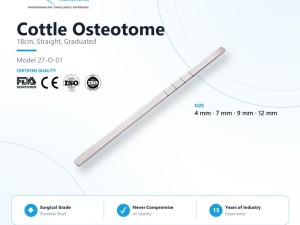
Cutting and shaping bone is one of the most delicate steps in rhinoplasty and facial surgery. The surgeon needs a clean, controlled cut in a small space, close to soft tissue that must not be torn. That is the job of the osteotome. Before the bone can be cut, the periosteum has to be lifted away cleanly, which is the job of the raspatory.
This guid..
19 Nov
0
100
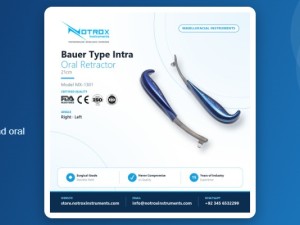
Maxillofacial surgery works where strength and precision meet. Surgeons treating a fractured mandible, correcting a jaw deformity or rebuilding the face after trauma need instruments strong enough to move bone, yet fine enough to protect the nerves, vessels and soft tissue around it. Access is often limited to the inside of the mouth, which makes i..